The Ultimate Guide to QR Codes in 2026: Bridging Worlds
QR codes have evolved from a clunky novelty to essential infrastructure. Discover the new best practices for physical-to-digital conversion.
"Scan to pay." "Scan for menu." "Scan to connect." The QR code has silently won the war for the physical interface. In 2026, the black-and-white square is no longer just a link; it's an app clip, a payment terminal, a login token, and an AR trigger. If your physical marketing doesn't have a digital handshake, you are dead in the water.
Table of Contents
The Renaissance: Why They Stuck
For a decade, marketers tried to make QR codes happen. Consumers resisted. Then, the 2020 pandemic forced a contactless revolution. We learned to scan menus. At the same time, Apple and Android integrated QR scanning directly into the native camera app. The friction dropped to zero.
Now, scanning is muscle memory. It is faster to point a phone than to type a URL. The QR code is the "Hyperlink of Reality."
Dynamic vs. Static: The Cost of a Mistake
This is the most critical technical distinction.
Static QR Codes: The destination URL is hard-coded into the pattern. The more complex the URL, the denser and harder to scan the code becomes. If you print 5,000 brochures and then change your website URL, those brochures are trash.
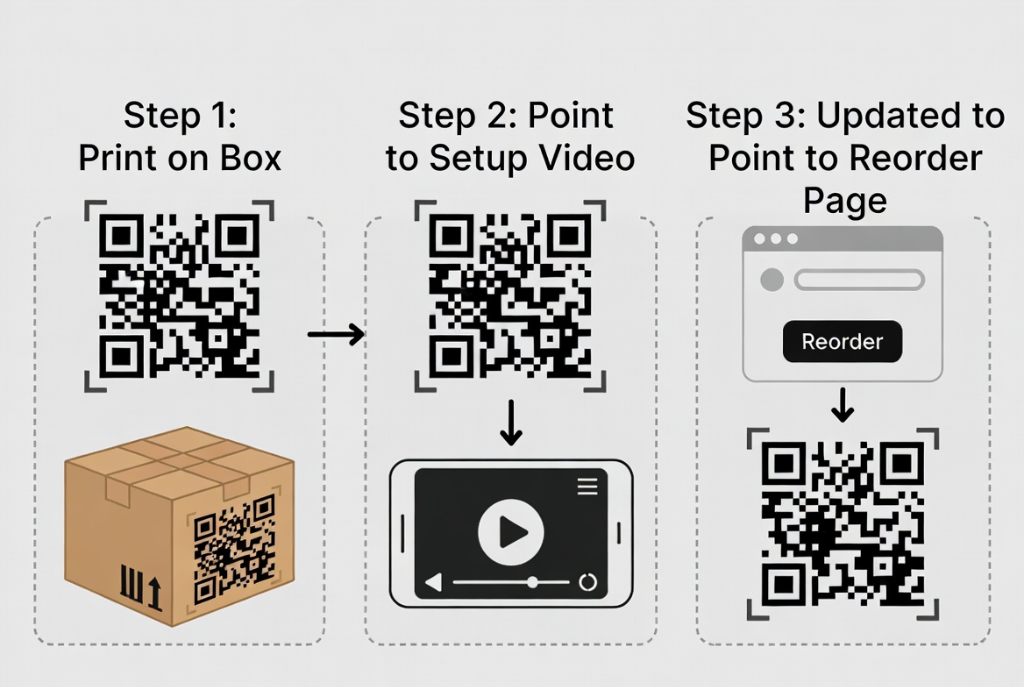
Dynamic QR Codes (BrandVia): The code points to a short link (e.g., link.brand.com/qr1). This redirects to your destination. The pattern is simple and scannable. Crucially, you can change the destination at any time. You can reprint nothing. You retain control.
Creative Use Cases for 2026
- Smart Packaging: Don't print a manual. Print a QR code that leads to a video tutorial. It saves paper and improves user experience.
- Event Networking: A QR code on your badge that leads to your LinkedIn or digital business card. No more typing names.
- Retail Inventory: "Don't see your size? Scan to order online with free shipping." Save the sale in the aisle.
- Direct Mail: Direct mail has high open rates but hard attribution. A unique QR code on a postcard bridges the gap exactly.
Design Best Practices
QR codes don't have to be ugly bloatware.
- Contrast is King: Black on white is safest. Dark blue on light yellow works. Light yellow on white will fail.
- Keep the Quiet Zone: The white border around the code is necessary for the scanner to detect the edges. Don't crowd it.
- Add a Logo: You can place your logo in the center (up to 30% coverage) thanks to error correction. It signals brand ownership.
- Always Include a CTA: A standalone code is a mystery. "Scan for 20% Off" is a reason.
Tracking Physical ROI
Dynamic QR codes give you the same analytics as digital links. You can see:
- Time of Scan: Did people scan during the event or after?
- Location: Where in the city are your flyers performing best?
- Device: (Almost always mobile, but OS matters).
The Evolution of the QR Code
| Era | Primary Use | User Friction |
|---|---|---|
| 2010-2015 | Marketing Gimmicks | High (Need special app) |
| 2020-2025 | Menus & Payments | Medium (Learning curve) |
| 2026+ | O2O (Offline to Online) Infrastructure | Zero (Native/Invisible) |
Common Mistakes to Avoid
- ✕ Printing too small: Minimum size should be 2cm x 2cm (0.8 in). Anything smaller is hard to focus on.
- ✕ Placing behind reflective glass: Glare kills scanners. Put the code on the outside of the window or use matte finishes.
- ✕ Moving targets: Don't put a QR code on a moving vehicle unless it's huge. Scanning requires a steady hand.
Frequently Asked Questions
Do QR codes expire?
Static codes never expire. Dynamic codes from BrandVia work as long as your subscription is active. We recommend dynamic codes for longevity.
Are they secure?
The code itself is just text. Security depends on the destination URL. Always scan codes from trusted sources to avoid "Quishing" (QR Phishing).
Ready to put this into practice?
Start creating branded links today and watch your engagement soar.
Get Started for Free